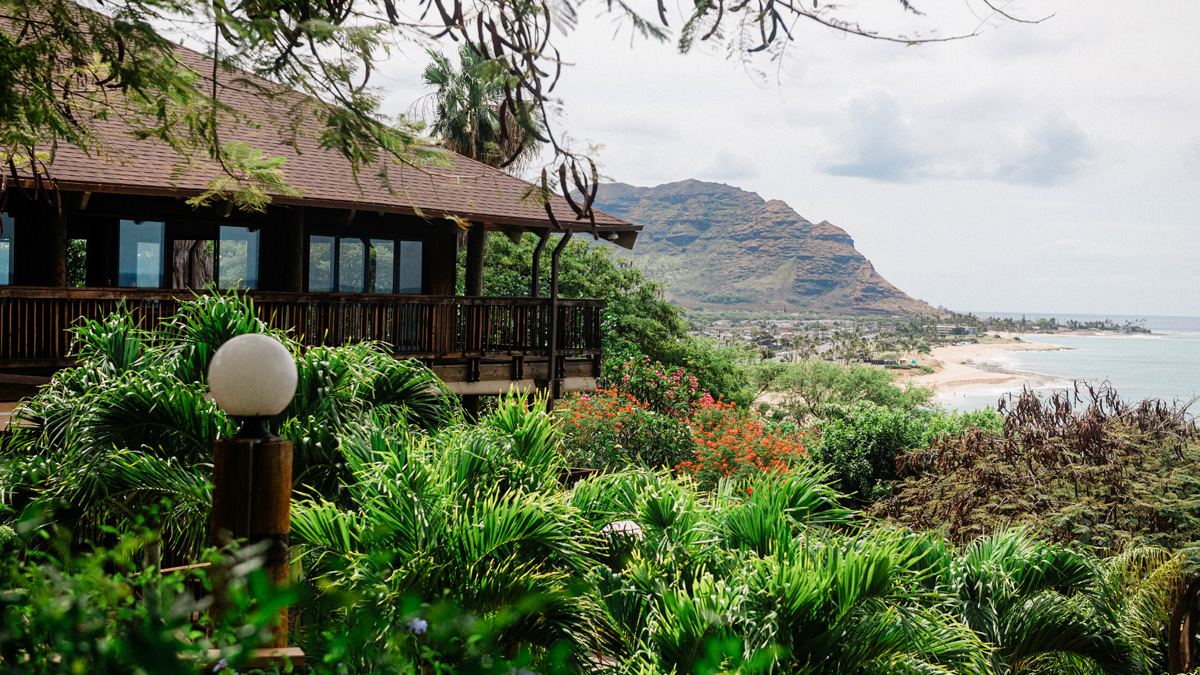
At a West Side health center, residents restore their health and balance through time-honored Hawaiian traditions.
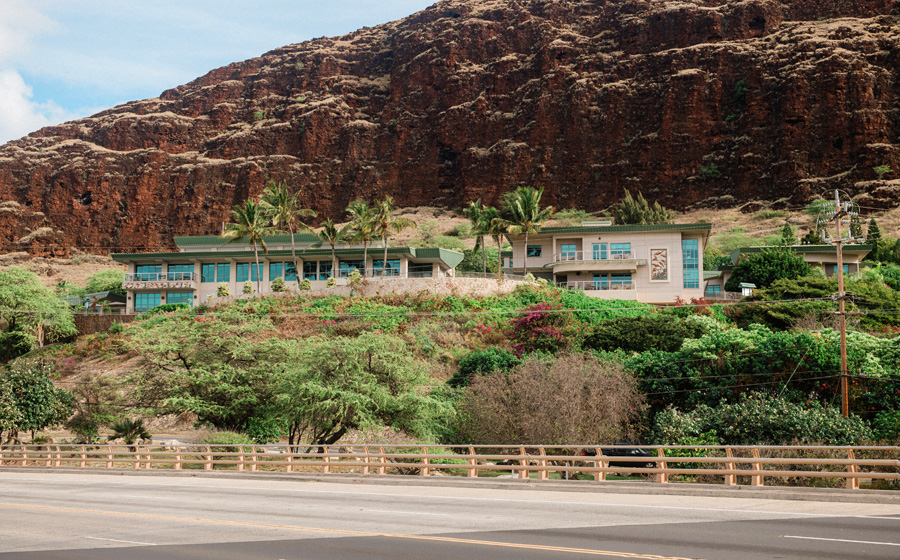
On the hillside peaks of Pu‘u Mā‘ili‘ili, among the medical buildings of the Waiʻanae Coast Comprehensive Health Center, lies a sanctuary of ancient wisdom. Here, at the Dr. Agnes Kalaniho‘okaha Cope Traditional Hawaiian Healing Center, skilled practitioners of Hawaiian healing arts nurture the community while passing their ‘ike (knowledge) on to others.
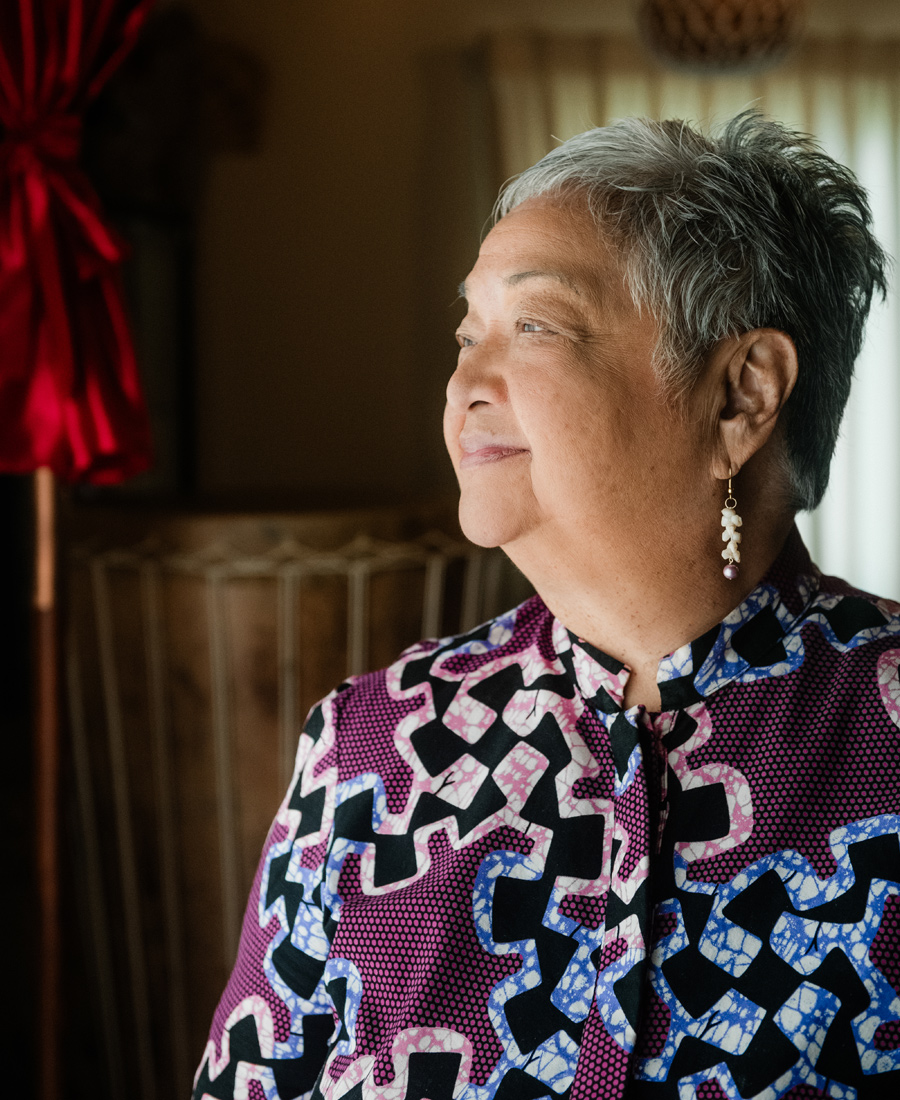
Opened in 2009, the center is named after the late “Aunty Aggie,” as she was affectionately known. A practitioner of lā‘au kāhea, or Hawaiian spiritual healing, Cope recognized the great need for a convenient and affordable healthcare center on O‘ahu’s West Side, home to a significant Native Hawaiian population, and played a key role in establishing WCCHC and its center dedicated to Hawaiian healing traditions.
The growing challenges of accessing cost-effective healthcare, particularly in underserved communities, have made alternative solutions more critical than ever. As medical costs continue to rise nationwide, the healing center offers an unconventional avenue for care: No insurance is required, services are free of charge, and no physician referrals are necessary. Instead, patients must decide to seek care on their own, per Hawaiian tradition, states the center’s administrator, Juanita “Aunty Nalani” Benioni, stressing the importance of self-empowerment in addressing health. “We believe that in traditional Native Hawaiian healing,” she says, “the individual has to choose this route, this path, and needs to make the walk.”
The center offers three primary therapies: lomilomi (Hawaiian massage therapy), lā‘au lapa‘au (plant medicine), and ho‘oponopono (conflict resolution). A form of talk therapy, ho‘oponopono emphasizes forgiveness, effectively bringing people together who have become estranged. Benioni, a ho‘oponopono practitioner herself, has witnessed firsthand its power to reunite families. “I believe it works. I’ve seen it work,” she says. Her goal in teaching ho‘oponopono techniques to others is to foster its positive, cascading effects. “They can take care of family issues before it gets to a practitioner here at the Healing Center.”
Lomilomi, the center’s most popular service, is not simply a massage. Administered by licensed massage therapists trained specifically in the art of the healing touch, it addresses the body’s physical ailments, such as sprains or chronic pain, but also realigns the body spiritually, mentally, and emotionally. Patients are encouraged to talk and let out their feelings. “They start to share things that they have never shared before, getting deep and then expressing it,” says Kaliko Chang, a lomilomi practitioner who has been at the Healing Center since 1992. According to Chang, sessions can be intensely emotional. “When they’re ready, that will happen.”
In some cases, lomilomi crosses over into the practice of lā‘au lapa‘au, incorporating medicinal ointments and salves that can be used for a physical ailment. Practitioners teach patients how to craft traditional medicine through demonstration so that they can bring those skills back home.
Many lā‘au lapa‘au consultations, however, are conducted by phone. “Most of our patients come from traditions of maybe a grandmother or aunty in their family who practiced traditionally, but they may be no longer here or the practice may be not completely remembered,” Benioni says. “So, they’ll call and say, ‘I remember my kupuna asking us to eat the pōpolo berries. Do you know how many we’re supposed to eat?’” The Healing Center then shares its ‘ike on the subject during the call.
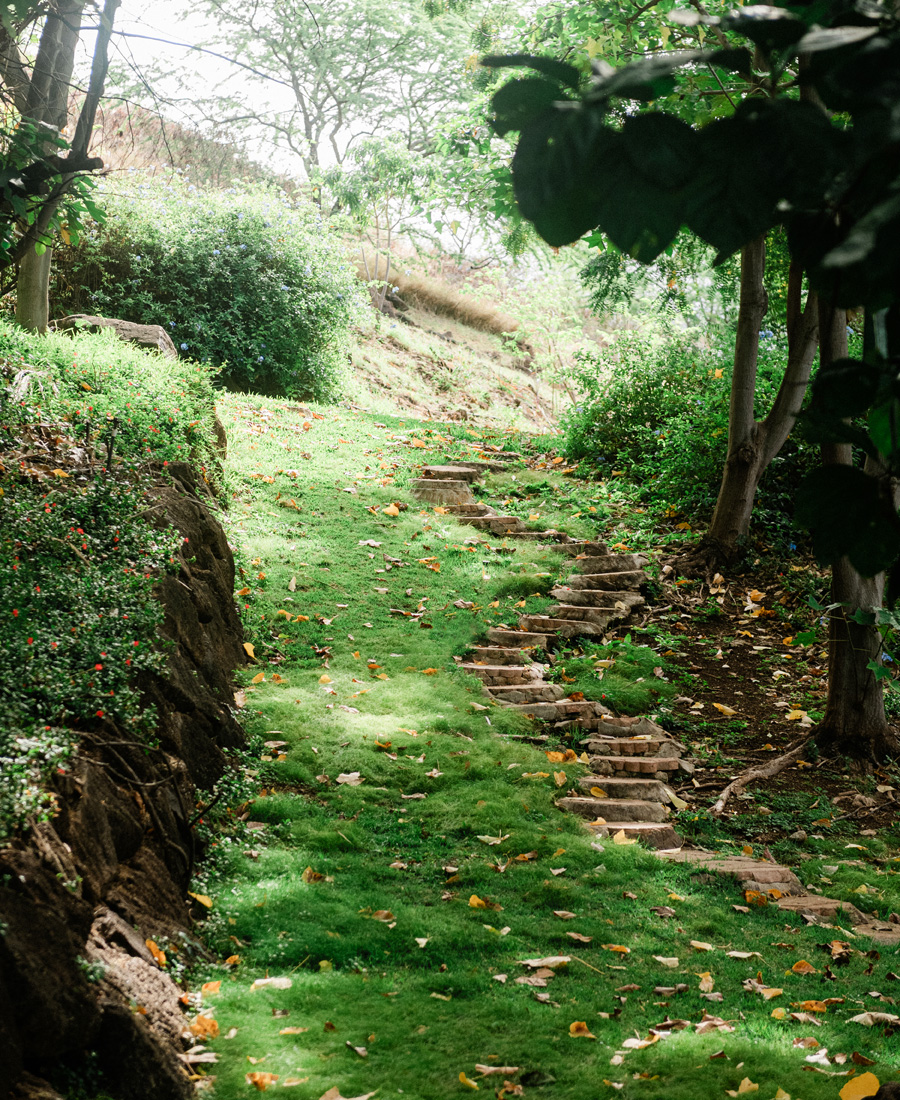
While there are hundreds of lā‘au (plants) utilized in the medicinal art, the Healing Center focuses on a dozen or so in its practice, including noni (Indian mulberry fruit) and māmaki (an endemic nettle plant), both of which are readily available in gardens on the grounds of the Healing Center. One particular walking trail called the Lāʻau Trail features additional healing plants such as lā‘ī (ti leaf ), kukui (candlenut), niu (coconut), awapuhi (ginger), and ‘ōlena (turmeric).
Benioni notes that while there isn’t enough scientific evidence to confirm lā‘au lapa‘au’s efficacy by Western medicine standards, the practice is rooted in centuries of ancestral knowledge. “We don’t say that any of our lā‘au cure anything. We just tell [patients] that, traditionally, this is what was used,” Benioni says, adding, “We believe these herbs are given to us by a greater power.”
The Healing Center is overseen by a Kūpuna Council, a council of elders who are master practitioners. They are responsible for ensuring that all practitioners are experts in their fields and that cultural knowledge is practiced and passed down correctly. “The number one priority is to preserve what is left of traditional medicine and practice while the elders are still alive,” says Kamaki Kanahele, director of the Kūpuna Council and son of Aunty Aggie. He recalls how diligently his mom worked to secure the land and gather funds for the Healing Center.
The Kūpuna Council also advises the Health Center on cultural activities. The program Hā Ola Mau, for instance, hosts lau hala weaving and feather lei classes. Building on the foundation stewarded by Cope, the Healing Center has had a profound impact on the immediate community. Since its opening 16 years ago, it has touched thousands of lives, spreading awareness of traditional healing practices while helping the community. “I hope to perpetuate the knowledge that [the Kūpuna Council] have shared over the many, many, many years to the next generation,” Chang says.
Learn more, visit wcchc.com.