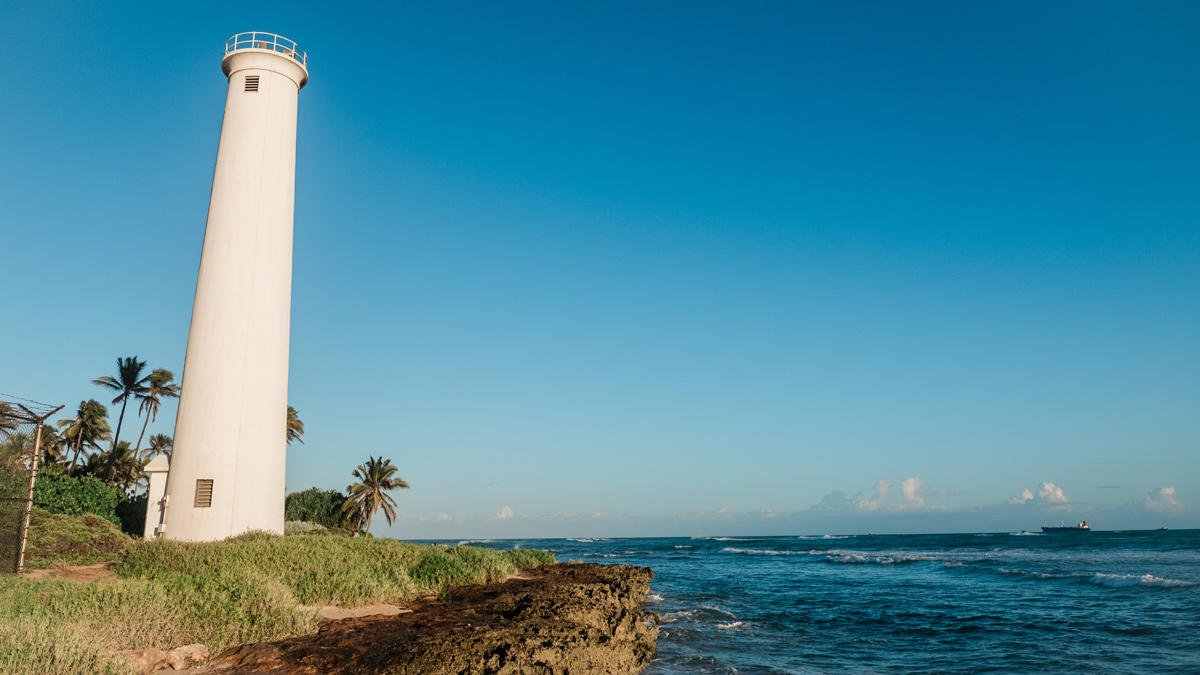
As one of the islands’ oldest beacons, Barbers Point Lighthouse has weathered the shifting tides of Hawaiʻi’s history.
Along Kalaeloa Boulevard, past the industrial baseyards filled with shipping containers and cement trucks and construction cranes, there is a narrow strip of coast. Barely a beach, it is a landscape of overgrown naupaka, a native shrub, and exposed reefs relentlessly pummeled by the rolling waves. It is here, on the rugged limestone shores of Kalaeloa on O‘ahu’s southwestern tip, that the historic Barbers Point Lighthouse has stood sentinel since 1888.
In October 1796 the English brig Arthur, enroute to China with a load of sea otter pelts, struck the coral shoals at Kalaeloa. The ship was destroyed and six of the 22 crewmen drowned—the first recorded fatal wreck of a European vessel in Hawaiʻi. The area would be named Barbers Point after Capt. Henry Barber, who had helmed the ill-fated ship.
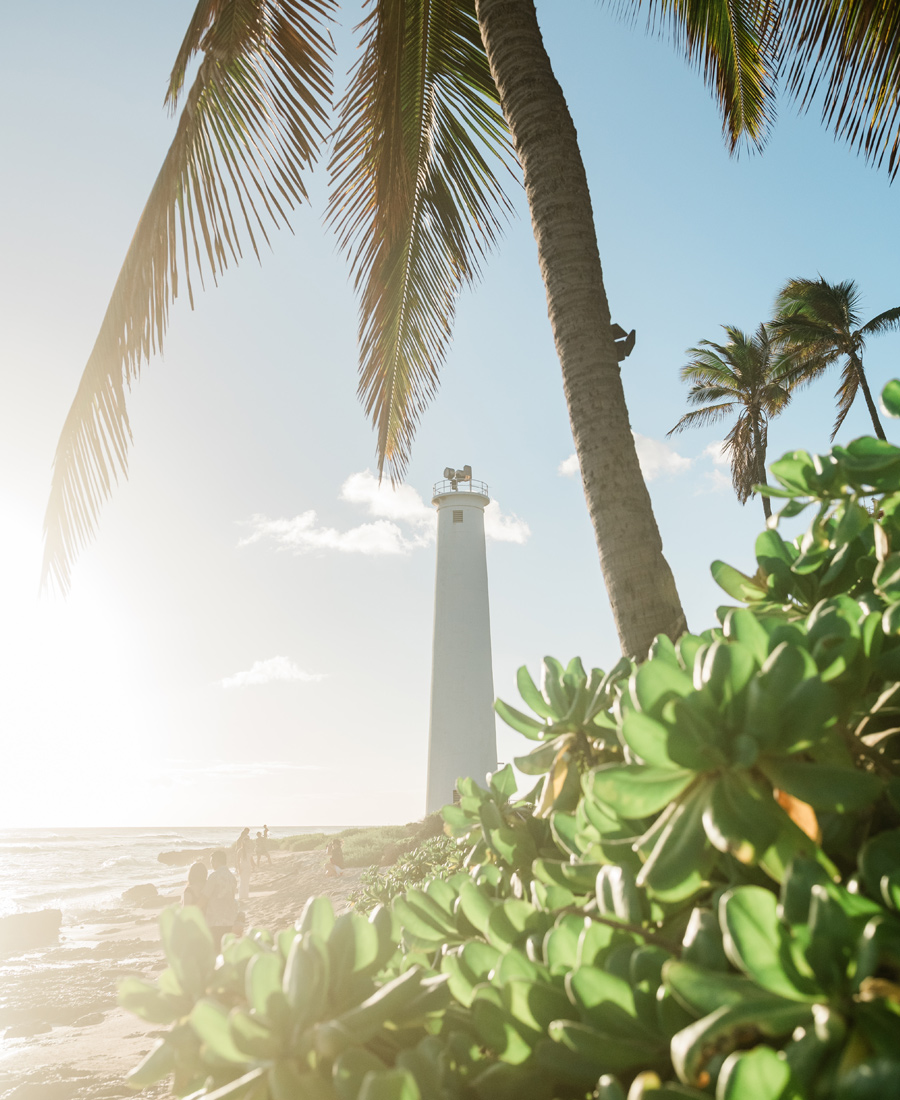
After another shipwreck in 1855, the Hawaiian government under King Kalākaua approved plans for a lighthouse. It took eight years to secure the funds—about $2,800 for a 42-foot concrete tower—and construct the lighthouse. For over 50 years, it was the tallest lighthouse in the islands, until it was surpassed by the 420-foot Makapu‘u Lighthouse in 1909. By 1930, it was showing signs of deterioration, and a new 72-foot tower was built three years later, equipped with a 700,000 candlepower light visible 15 miles at sea. On the morning of the attack on Pearl Harbor, aerial combat between Japanese and U.S. fighter pilots erupted in the skies above the lighthouse.
Keeper John M. Sweeney observed the action from his post. “Two parachutists were dropped close to the station; they were confused in the [kiawe] trees and prowled around the station all Sunday night,” he later wrote. The Army would commandeer the lighthouse, installing machine gun emplacements inside. A decade later, with the fog of war lifted, the same spiral staircase welcomed trick-or-treating kids, ascending the lighthouse to receive candy from a “ghost” in the lantern room.
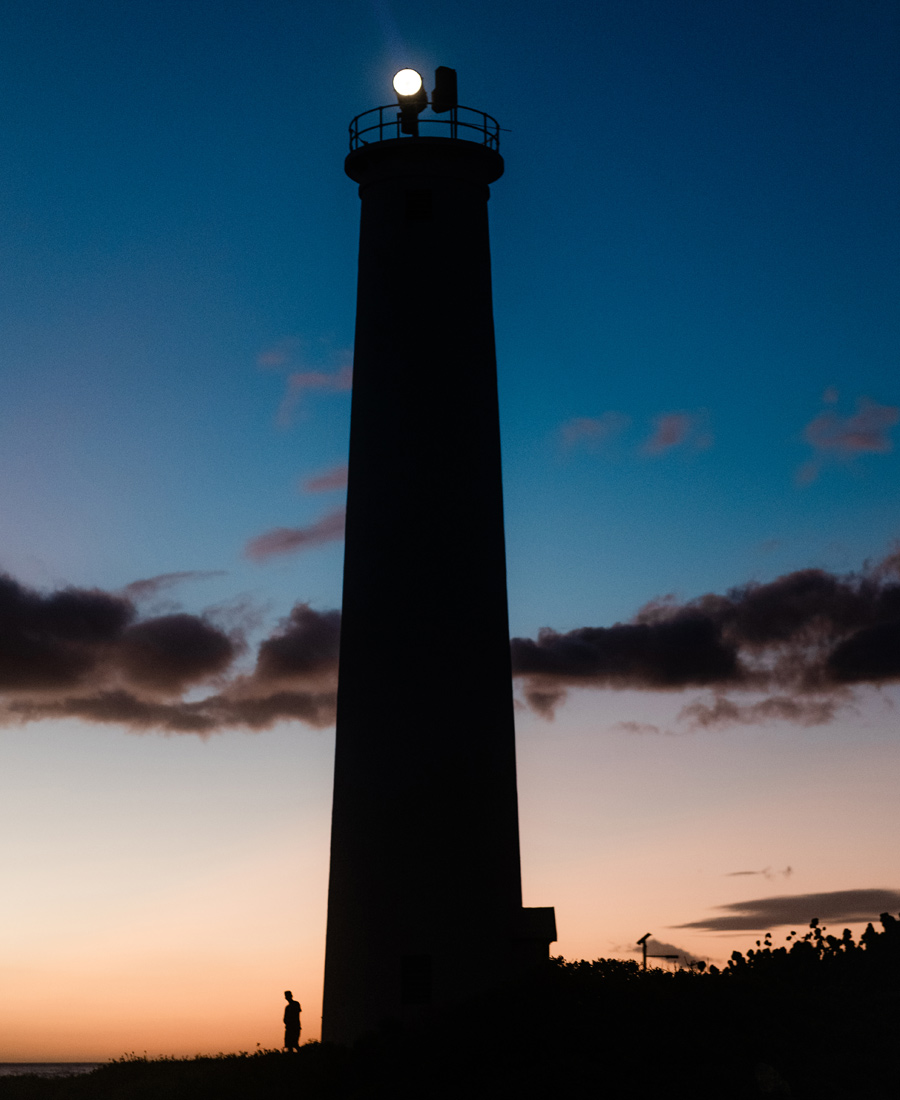
The lighthouse was automated in 1964, ending the long lineage of keepers. Today, its operation and maintenance is overseen by the U.S. Coast Guard, one of the 15 Hawaiʻi lighthouses under its care. The lantern room and Fresnel lens have been removed and donated to the Columbia River Maritime Museum in Astoria, Oregon, where they remain on display. The surrounding area has seen its fair share of changes, too.
The old sugarcane fields that once surrounded the lighthouse have been replaced with golf courses and strip malls. Five days a week, cars and buses crowd into the manicured grounds of the popular Germaine’s Lūʻau next door. Still, the lighthouse stands firm through the ebbs and flows of Hawaiʻi’s history. From the days of the Hawaiian Kingdom to the Overthrow to statehood. From wartime to peacetime. And here, it will continue to stand, witness to the future of these islands.